
Structured cabling for America’s top 20 metros
Cablify is a low-voltage contractor for businesses in the 20 largest U.S. metro economies, from New York and Los Angeles to Denver and Charlotte. We install data cabling, fiber, security cameras, access control and Wi-Fi, from a single office to a network of stores, branches and warehouses.
Or call 1-877-855-3865 to talk through a project.
The 20 largest U.S. metro economies
- ME
- VT
- NH
- WA
- ID
- MT
- ND
- MN
- IL
- WI
- MI
- NY
- RI
- MA
- OR
- NV
- WY
- SD
- IA
- IN
- OH
- PA
- NJ
- CT
- CA
- UT
- CO
- NE
- MO
- KY
- WV
- VA
- MD
- DE
- AZ
- NM
- KS
- AR
- TN
- NC
- SC
- DC
- OK
- LA
- MS
- AL
- GA
- TX
- FL
- Metro market
- Coming soon
Point to a state to see the metro areas we cover there.
- 18 years in commercial low-voltage work
- Hubbell Certified Installer for structured cabling systems
- 20 metro markets that produce close to half of U.S. GDP
- Free site assessments for commercial projects
What we install
Commercial low-voltage work only. We plan the pathways, pull and terminate the cable, label it to TIA-606, test it, and hand over records your IT team can use.
Cabling
Copper and fiber from the telecom room to every outlet, access point and camera.
Security and wireless
Cameras, card readers and access points, installed on the same schedule as the network cabling.
Rooms and projects
Server rooms, racks, and the work that comes with new space, moves and old cable.
Programs
One scope, one labeling standard and one closeout format for every location.
From one building to every location you run
The cabling is the same at any size. What changes is how the work is planned, priced and reported.

Single buildings
Offices, warehouses, clinics, schools and new construction, priced from drawings or a free site assessment.
- New cabling, fit-outs and expansions
- Moves, adds and changes in occupied space
- After-hours work when staff are on site
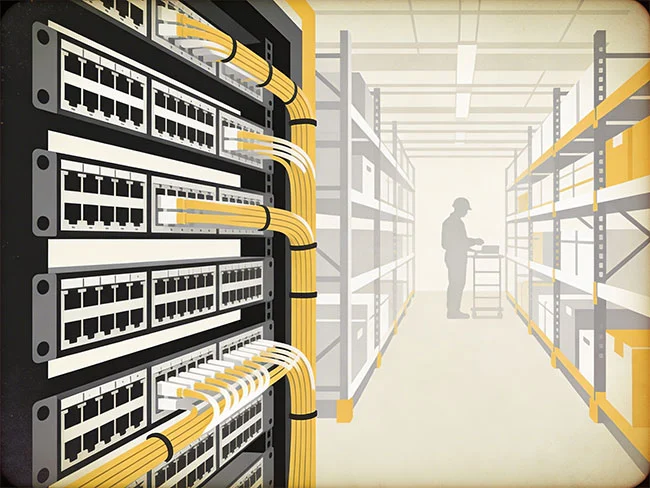
Regional portfolios
Several buildings in one metro area or state, such as a clinic group, a distribution network or a property portfolio.
- One cabling standard for each building type
- Sites scheduled in sequence with one contact
- Pricing per building type

National rollouts
Stores, branches, restaurants and offices across several metro areas, delivered to one scope of work.
- One bill of materials for each site type
- Installs scheduled in waves around opening hours
- Status and closeout records for every site in one format
Estimate your cabling scope
Pick a building type and floor area to see a typical count of data drops, Wi-Fi access points, cameras and card reader doors. Send the numbers with your quote request and we will refine them from your drawings or a site visit.
Site assessments are free.
- Data drops
- 160 to 240
- Wi-Fi access points
- 8 to 12
- Security cameras
- 5 to 8
- Card reader doors
- 3 to 4
Planning estimate for a 20,000 sq ft office, based on about one data drop per 100 sq ft and one access point per 2,000 sq ft. A site assessment sets the real count.
Industries we work in
Each building type changes the cable plan. These are the details we look at first.
Corporate offices
Cat6A to access points and conference rooms, pathways kept clear of lighting and sprinklers, and phased work on occupied floors.
Warehouses and distribution
Fiber to IDF cabinets once runs pass 90 meters, access points placed for scanners between full racks, and cameras on docks and yards.
Manufacturing
Cable routed away from motors and drives, conduit where the floor calls for it, and cameras over production and shipping.
Healthcare and clinics
Dense drops in exam rooms and nurse stations, card access on medication and records rooms, and work around patient hours.
Retail and restaurants
Point-of-sale, camera and Wi-Fi drops repeated store to store, installed before opening or overnight.
Education
Classroom drops and access points sized for every student device, with door access and cameras at building entries.
Hospitality
Back-of-house networks, guest Wi-Fi access points, and cameras at entrances, lobbies and parking.
Commercial real estate
Riser backbone, tenant fit-out cabling, and removal of abandoned cable before a space is leased again.
Where we work
The 20 largest U.S. metro economies, each covered from downtown to the suburbs. Austin, Tampa, Orlando, St. Louis and Riverside-San Bernardino are coming soon. For any other address, send it with your request and we will quote it case by case.
Northeast and Mid-Atlantic
Texas and Mountain West
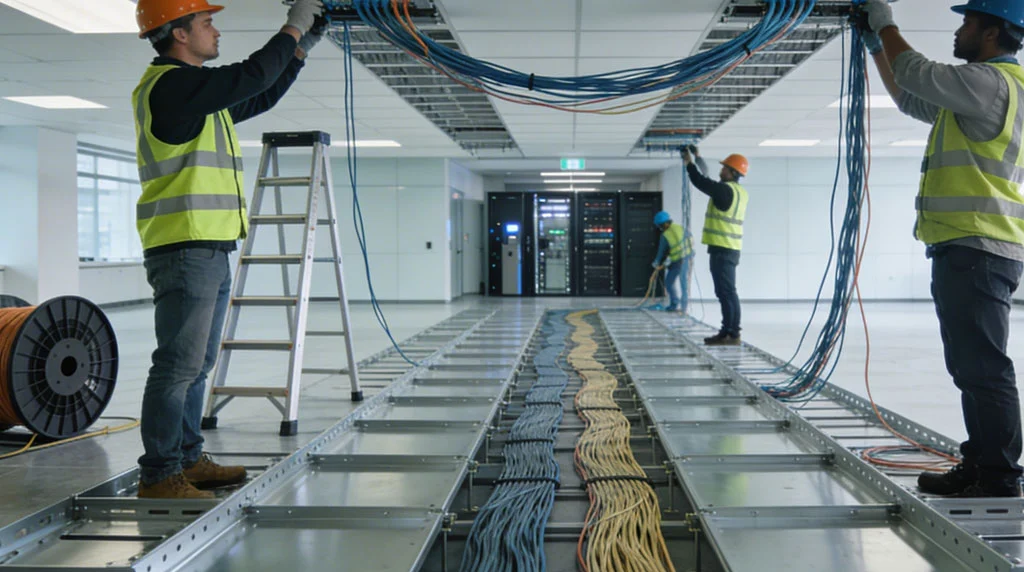
The same closeout at every site
Cabling is only useful if the next technician can trace it. Every location gets the same records, so your IT team can support a site in Ohio the same way as one in Arizona.
- Cable labels that match the patch panel ports and the floor plan
- A port map and as-built drawing showing where each run goes
- Fluke certification reports for copper, and loss or OTDR results for fiber, when the project calls for them
Common questions
Do you work in my city?
If the site is in one of our 20 metro areas, yes, including the suburbs. Other markets are coming soon. Send the address with your request and we will confirm the schedule, or quote it case by case if it falls outside the 20.
Can you handle a rollout across many locations?
Yes. We plan rollouts around one scope of work and one labeling standard for each site type, schedule installs in waves, and return closeout records for every site in the same format.
Do you supply equipment or only install?
Either. We can quote supply and installation together, or install cable, cameras and access control hardware you have already bought. Say which in your request.
Should a new office use Cat6 or Cat6A?
Cat6 handles gigabit to the desk across a full 100 meter channel but carries 10 Gb only to about 55 meters. Cat6A carries 10 Gb across the full channel and runs cooler with high-power PoE in large bundles, so we recommend it for access points, cameras and any space you plan to keep for ten years or more.
Can you work in an occupied building?
Yes. We phase work by floor or zone and schedule loud or disruptive work after hours, so your staff can keep working.
How do you price a job?
From drawings, a walk-through, or both. Site assessments are free. For multi-site work we price each site type, so every location of that type costs the same.
Request a quote
Send the address, building type and what you need installed. For several locations, tell us how many and describe a typical site. Drawings help but are not required.