
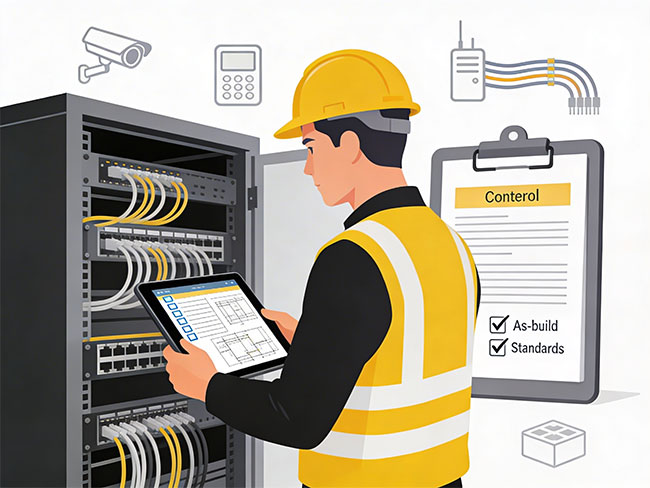

Businesses today need more control over who can enter offices, server rooms, inventory areas, clinics, stockrooms and restricted work zones. Traditional keys create management problems as staff changes, vendors rotate and facilities expand. Door access control systems give organizations a more flexible way to manage entry without sacrificing security or operational efficiency.
Door access control is not just about locking a door. It is about creating a more manageable, visible and scalable security model for the way a commercial facility actually operates every day.
Why door access control matters for modern businesses
Commercial buildings no longer operate with only one front door and a handful of employees. Most facilities have multiple entry points, restricted rooms, vendor access needs, cleaning crews, delivery schedules and changing employee responsibilities. A physical key system becomes harder to manage as soon as the building grows in complexity.
Door access control solves that problem by letting security, facilities and operations teams decide who can enter specific areas, when they can enter and how entry events are tracked. It also aligns well with broader access control systems, low-voltage infrastructure and network cabling that support connected commercial environments.
Operational benefits of smarter entry management
Administrators can issue, update or revoke access without collecting physical keys from every user.
Entry records help security teams review activity at doors, restricted spaces and critical operational areas.
Lost badges, employee role changes and vendor access updates can be handled quickly without changing locks.
The same access framework can grow from one office to a larger portfolio of locations and facilities.
What door access control usually includes
A commercial access control deployment usually includes door readers, controller hardware, door locks or strikes, software for user permissions and the supporting cabling needed to connect the system. In many buildings, these systems also integrate with surveillance, intercoms or alarm workflows.
Depending on the facility, businesses may choose keycards, mobile credentials, PIN-based entry or biometric verification. The right model depends on the type of users, the number of doors, the level of security needed and how often permissions change.
Which business environments benefit most
- Corporate offices managing employee entry, shared suites and sensitive rooms
- Warehouses and logistics facilities controlling loading docks, inventory zones and operational access
- Healthcare clinics and medical offices protecting staff-only and records-related areas
- Retail and franchise businesses securing stockrooms, back offices and controlled entry points
- Multi-site operators trying to standardize credential management across several facilities
Planning considerations before installing a system
Before deploying door access control, businesses should look beyond the hardware itself. Good planning includes the number of controlled doors, building traffic patterns, staff and visitor workflows, integration requirements and the supporting cabling or network environment needed to keep the system stable.
In practice, that means clarifying priorities such as:
- Which doors, rooms or zones actually need controlled access?
- How often will credentials need to be added, updated or revoked?
- Should the system integrate with cameras, alarms or visitor management?
- Will the building expand or add more controlled doors later?
Why integration makes access control more valuable
Access control becomes much more useful when it works alongside other building systems. For example, a business may want door events associated with camera footage, visitor sign-ins or alarm activity. Integration helps create a single operational picture instead of several disconnected security tools.
That is one reason commercial deployments often need better coordination between access control, low-voltage cabling, camera infrastructure and network connectivity. A cleaner installation model makes future expansion and day-two support much easier.
Common mistakes businesses make with entry security
Many organizations choose hardware without fully planning who will manage credentials, how doors will be grouped or how the system should scale. Others install partial systems that do not align with existing building workflows, which leads to workarounds, inconsistent permissions and more security gaps over time.
A stronger access control strategy starts with actual building use, not just the device list. When the credential model, door priorities and infrastructure support are planned together, businesses end up with a more dependable and manageable security environment.